
Table of Contents
ToggleKilimanjaro Umbwe Route
The umbwe route as the most direct and intense path to uhuru peak
The Umbwe Route on Mount Kilimanjaro is widely recognized as the most direct, steepest, and physically demanding trekking route leading to Uhuru Peak, the highest point in Africa at 5,895 meters. Unlike other established routes that are designed to gradually introduce climbers to altitude over several days, Umbwe is engineered almost like a straight vertical ascent through the southern slopes of the mountain.
This creates a completely different climbing experience—one that is far more aggressive, physically taxing, and mentally demanding from the very beginning. Rather than easing into high elevation, climbers are immediately exposed to steep gradients, rapid altitude gain, and continuous uphill progression with very limited recovery sections. This makes the route particularly appealing to experienced trekkers who are not simply looking for a scenic hike, but instead want a raw expedition-style challenge that tests endurance, resilience, and high-altitude adaptability. The overall character of Umbwe is defined by intensity rather than comfort, and it is often described as the “climber’s route” because it prioritizes directness and difficulty over gradual acclimatization or tourist-friendly pacing.
Geographical origin and the early rainforest ascent experience
The journey along the Umbwe Route begins at Umbwe Gate, located on the southern lower slopes of Mount Kilimanjaro within Tanzania’s Kilimanjaro National Park. From the very first steps, climbers are immersed in dense tropical rainforest, a lush and humid ecosystem filled with thick vegetation, towering trees, moss-covered branches, and constant moisture in the air. Unlike other routes that begin with gentler terrain or gradual elevation, Umbwe immediately introduces a steep uphill climb that feels physically demanding even before altitude becomes a factor.
The forest floor is often muddy and slippery, especially during rainy seasons, which increases the technical difficulty of movement and forces climbers to carefully manage each step. Despite its beauty and occasional wildlife sightings such as colobus monkeys or exotic forest birds, this section is less about sightseeing and more about adaptation to physical strain. The combination of humidity, incline, and heavy backpack load creates an early test of endurance that sets the tone for the rest of the expedition.
Early altitude transition and the beginning of physical stress
As climbers continue upward from the rainforest zone, the environment gradually begins to change, signaling the transition into higher altitude conditions. Although the vegetation remains dense at first, subtle shifts in temperature, air density, and oxygen availability begin to affect physical performance. Breathing becomes slightly deeper, resting heart rate increases, and movement starts to feel more effortful even though the trail remains within the forested region.
This is the point where the Umbwe Route begins to distinguish itself from more gradual approaches, because the body is forced to adapt to elevation gain without sufficient time for physiological adjustment. The lack of flat terrain means there are few opportunities for recovery, and climbers often find that fatigue accumulates much faster than expected. Even experienced hikers may notice that their pace naturally slows as the body prioritizes oxygen conservation over speed or efficiency.
Heather and moorland zone: the first exposure to open high-altitude terrain
After leaving the dense rainforest behind, the Umbwe Route transitions into the heather and moorland zone, a dramatic ecological shift that marks the true beginning of high-altitude trekking conditions.
Here, the landscape opens significantly, replacing enclosed forest with expansive ridges, scattered volcanic rock formations, and hardy vegetation adapted to colder and thinner air. Giant heathers and alpine shrubs dominate the terrain, creating a surreal environment that feels both ancient and alien. Climbers are now exposed to wind, stronger sunlight, and rapidly dropping temperatures, especially during early mornings and evenings.
The physical challenge intensifies as the trail continues its steep upward trajectory without significant breaks. This is also where altitude effects become more noticeable, as oxygen levels are now significantly lower than at sea level, forcing the body into a continuous state of adaptation. The sense of isolation increases as well, since fewer climbers are encountered compared to more popular Kilimanjaro routes.
Barranco camp: the strategic crossroads of the southern circuit
Barranco Camp, situated at nearly 4,000 meters above sea level, represents one of the most important milestones on the Umbwe Route expedition.
This camp is not only a resting point but also a convergence zone where multiple Kilimanjaro routes merge, including Machame and Lemosho, creating a rare moment of shared trekking experience among climbers who started from different directions. The location itself is visually striking, surrounded by towering volcanic walls and offering panoramic views of Kilimanjaro’s upper slopes.
While arrival at Barranco provides a sense of relief after the intense early ascent, it also serves as a reality check, reminding climbers that the most difficult altitude challenges still lie ahead. The atmosphere at the camp is often a mixture of exhaustion and anticipation, as trekkers prepare for the next demanding sections of the route while adjusting to increasingly thin air and colder nighttime temperatures.
The barranco wall: a physical and psychological turning point
One of the most iconic features encountered after Barranco Camp is the Barranco Wall, a steep rocky formation that climbers must ascend using a combination of hiking and light scrambling.
Although it is not technically a climb requiring ropes or specialized equipment, it demands careful balance, focus, and controlled movement due to exposed sections and narrow ledges. The wall often appears more intimidating than it actually is, but its steepness and altitude make it physically demanding, especially for climbers already dealing with fatigue and reduced oxygen levels.
As climbers ascend, the effort required becomes more mental than technical, requiring trust in guides and steady pacing. Reaching the top of the wall is often described as a psychological breakthrough, as it marks a transition from steep obstacle navigation to more open alpine terrain with expansive views that stretch across valleys and ridges shaped by volcanic activity.
Southern circuit integration and the shift into high alpine desert
After completing the Barranco Wall, the Umbwe Route merges into the Southern Circuit, where it joins other major Kilimanjaro routes and continues across the upper slopes of the mountain. This section is characterized by long traverses along exposed ridges, dramatic views of glaciers, and a gradual but relentless increase in altitude.
The landscape transitions into alpine desert conditions where vegetation becomes extremely sparse, temperatures fluctuate sharply between day and night, and sunlight exposure becomes more intense due to thinner atmospheric protection.
The physical demand here is less about steep climbing and more about sustained endurance at high altitude. Every step requires energy management, and climbers often find themselves moving slowly and deliberately as fatigue accumulates over multiple days of continuous ascent.
Karanga valley: the final physiological adaptation zone before summit push
Karanga Valley serves as a critical acclimatization and recovery stage on the Umbwe Route before the final ascent toward summit base camp. Although it may appear to be a temporary descent, its importance lies in physiological stabilization rather than physical relaxation. At this elevation, the body is already operating under significant oxygen deprivation, and even basic movement requires conscious effort.
The terrain is dry, rocky, and exposed, with minimal vegetation and strong environmental contrasts between daytime heat and nighttime cold. Climbers often experience reduced appetite, slower recovery, and increased fatigue accumulation during this stage. Despite its harshness, Karanga Valley plays a vital role in preparing the body for the extreme conditions ahead, acting as the final checkpoint before entering the highest altitude zone of the mountain.
Barafu camp: the final base before summit night
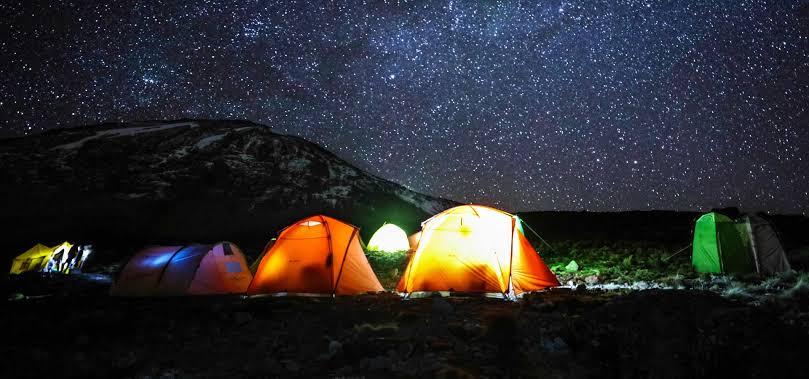
Barafu Camp represents the last staging point before the summit attempt and is widely regarded as one of the most challenging camps on Kilimanjaro due to its extreme altitude and harsh environmental conditions. Located at over 4,600 meters, the camp is exposed, cold, and often windy, with minimal vegetation and thin air that makes even simple tasks physically exhausting.
Climbers typically arrive in the afternoon, attempt to rest briefly, and prepare for a very early midnight departure toward the summit. Sleep quality is usually poor due to altitude stress, cold temperatures, and psychological anticipation of the summit push. Despite its discomfort, Barafu Camp is strategically essential because it positions climbers within close reach of Uhuru Peak, making it the final preparation zone for one of the most demanding physical efforts of the entire expedition.
Summit night: the most intense phase of the entire expedition
Summit night on the Umbwe Route begins in complete darkness, usually between midnight and early morning hours, as climbers begin their final ascent toward the crater rim. This section is defined by extreme cold, very low oxygen levels, and continuous steep climbing on loose volcanic terrain.
Movement is extremely slow and rhythmic, as climbers must conserve energy for several hours of continuous uphill progression. Fatigue is compounded by altitude, and every step requires mental discipline to maintain consistency.
The darkness, combined with physical exhaustion and thin air, creates one of the most psychologically demanding trekking experiences in the world. Despite this, the structured pacing enforced by guides helps climbers maintain steady progress toward the summit ridge.
Uhuru peak: the summit of africa and the ultimate reward
Reaching Uhuru Peak represents the culmination of the entire Umbwe Route expedition and stands as one of the most significant achievements in high-altitude trekking. At 5,895 meters, climbers experience a surreal environment of glaciers, crater formations, and panoramic views across the African continent.
The sunrise at the summit often creates a powerful emotional moment, as golden light spreads across the landscape and highlights the vast scale of the mountain. The sense of accomplishment is intensified by the physical and mental challenges endured over several days of continuous ascent.
For many climbers, this moment becomes a deeply personal milestone, symbolizing endurance, patience, and determination at the highest level.
Descent via mweka route and the return to lower altitudes
After a short time at the summit, climbers begin the descent via the Mweka Route, which provides a faster but physically demanding return path through the mountain’s ecological zones. While oxygen levels improve quickly during descent, the strain on joints and muscles increases due to long downhill sections and accumulated fatigue from summit night.
The journey back passes through alpine desert, moorland, and rainforest zones in reverse order, creating a gradual reintroduction to richer oxygen levels and warmer temperatures.
As climbers descend further, physical recovery begins, appetite returns, and energy levels improve significantly. The expedition concludes at Mweka Gate, where climbers officially exit the national park, marking the end of one of the most intense trekking experiences in Africa.
Are you ready to start planning?
You can proceed with booking by filling out the form below. Let’s make your adventure unforgettable!